
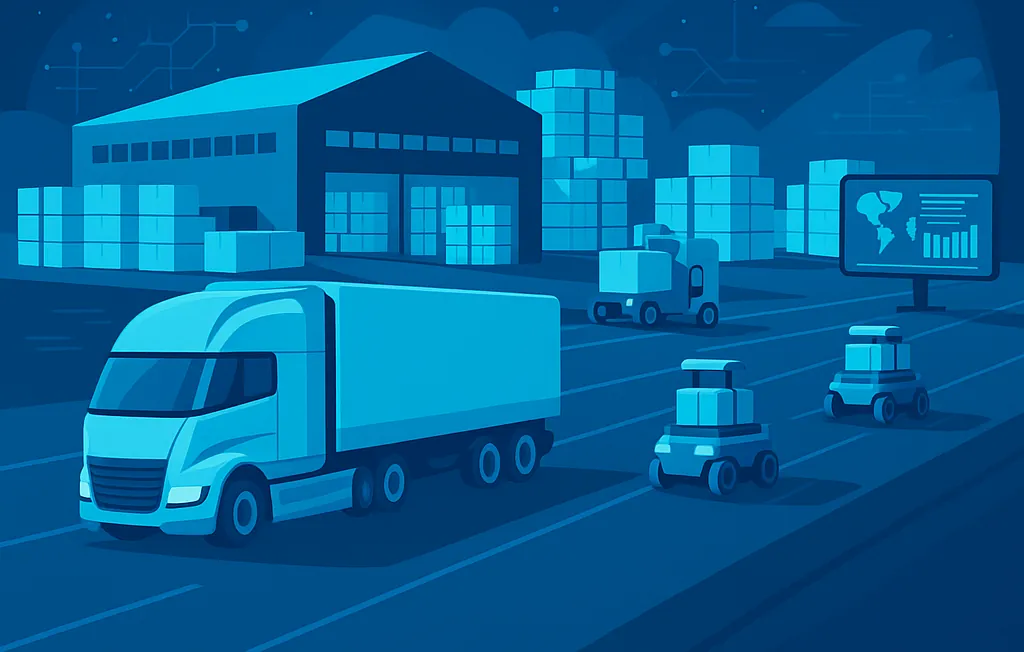
2025 closes with significant movement across the global logistics industry. 2026 is expected to consolidate trends that were already gaining traction: digitalization, automation and sustainability. For companies in Mexico, this represents a real opportunity to improve competitiveness, efficiency and adaptability.
At Palos Garza, our commitment is to support companies by adapting processes, investing in technology and enabling cleaner, more efficient and reliable operations.
1) Digitalization and data as an operating foundation
Leading companies no longer operate with manual spreadsheets or improvised processes. Inventory, routes, transit times and performance data are increasingly integrated into systems that provide visibility and support better decisions.
2) Automation, robotics and optimized processes
Automation continues expanding from plants and distribution centers to final transportation. This includes automated warehouse management, route coordination, demand forecasting and operating workflows that reduce manual intervention. Intensive use of technology is no longer optional; it is becoming a differentiator.
3) Sustainability and environmental pressure as drivers of change
Sustainability has moved beyond marketing. Cleaner energy, route efficiency, emissions reduction and environmental compliance are becoming real operating requirements. By 2026, many companies will face stronger pressure to adapt their operations to environmental criteria.
4) What this means for companies in Mexico, the Bajío and Western Mexico
- Reduce time and errors in customs, documentation and internal procedures.
- Optimize warehousing, routes and delivery times through automated systems.
- Meet environmental standards that can become a differentiator with global customers.
- Increase resilience against disruptions, regulatory changes and volatile demand.
5) How Palos Garza sees 2026
We see digital transformation, operating automation and environmental compliance as growing expectations from customers and markets. Our role is to help companies translate those trends into practical logistics decisions: better planning, cleaner execution and stronger visibility.