
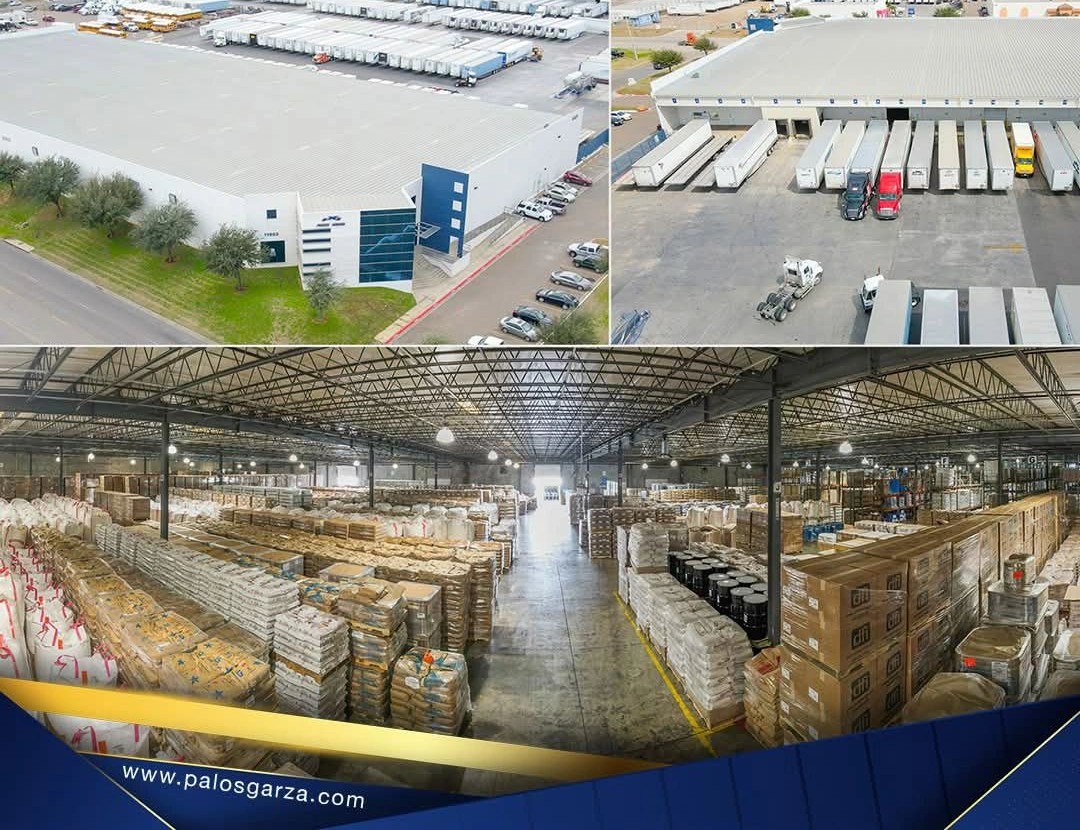
Infrastructure and specialized services across the Laredo–Nuevo Laredo corridor, with complementary capacity near Colombia, Nuevo León.
For years, logistics decisions in Mexico centered on the port of entry, the transportation rate and customs-clearance cost. That view is no longer sufficient for manufacturers supplying the United States: much of their continuity is determined at the border.
Nuevo Laredo is an essential node in the Mexico–U.S. network. That does not make it a problem; it makes it the place where misalignment in documentation, capacity or scheduling becomes visible very quickly.
The challenge is not crossing once. It is crossing consistently without transferring variability to production, inventory or customer service.
When 24 hours stops being a minor delay
A traditional operation may absorb an additional day. At a plant with lean inventory, delivery windows and continuous production, the same day triggers expensive decisions: consume safety stock, reschedule production, order an expedite or explain a service failure to the customer.
A Mexican plant supplies components to the United States under a near-just-in-time model. The shipment crosses 24 hours after its expected window. The cargo arrives, but the system has already consumed protection inventory, moved the schedule and reduced its capacity to absorb the next incident.
The average hides the risk that actually matters
Two providers can report the same average transit time and produce very different outcomes. If one maintains controlled dispersion while the other alternates between fast crossings and severe delays, the second operation forces the customer to protect itself with more inventory, schedule buffers and emergency capacity.
A serious operating review should therefore look beyond rate and average time:
- performance against the committed window;
- variation by day, schedule and operation type;
- cause and duration of exceptions;
- response time when an incident occurs;
- inventory, expedite and avoidable downtime costs.
Conceptual visual: total cost depends on the sensitivity and variability of each operation; this is not a quotation.
Colombia should not be a rescue plan; it should be part of the architecture
An alternate route adds little value if a company tries to activate it after the disruption has already happened. For Colombia to complement Laredo, permits, schedules, carriers, clearance, facilities, communication and decision criteria must be addressed in advance.
The objective is not to replace the primary corridor automatically. It is to build optionality: keep the main operation while maintaining a previously validated alternative for specific scenarios.
Emergency air freight is a signal, not a strategy
When critical material misses its border window, Monterrey may become the pressure-release valve. Air freight protects the line, but destroys part of the margin. If the exception repeats, the aircraft is not the core problem; a network that reacts too late is.
How much emergency air spend comes from a genuine commercial need—and how much comes from variability, incomplete documents or late border decisions?
From a linear operation to a network with options
The “origin → transportation → crossing → delivery” model assumes that each link will perform as planned. A more mature architecture defines routes, owners and thresholds before the exception.
Five decisions to make before the next peak
- Segment freight by criticality. Not every shipment needs the same level of protection.
- Measure variability and causes. Separate congestion, documentation, inspections, capacity and coordination.
- Prevalidate alternate routes. Colombia and other crossings should be tested before they are needed.
- Define escalation rules. Establish who decides, based on which information and at what point.
- Integrate providers. Customs, transportation, warehousing and inspections should operate from the same view of risk.
What is truly at stake is continuity
Laredo will remain fundamental to Mexico–U.S. trade. The strategic decision is not to avoid it, but to use it inside a network that can absorb exceptions without turning every delay into a financial emergency.
When a company measures consistency, prepares alternatives and coordinates critical points under one operating strategy, the crossing stops being a daily bet and becomes a controlled part of the supply chain.
Is your operation designed to absorb variability?
Palos Garza can review the lane, friction points and alternatives before preparing a quote. If your company is evaluating providers, we can also share capabilities and participate in your next RFQ, RFP or BID.