
Ports · Beverages · Diversification
Altamira for Mexican beverages: how to evaluate a second route without improvising it
Diversification does not mean moving every shipment to another port. It means building an alternative that can be activated with documents, costs and owners already defined.
Palos Garza Guadalajara · Updated July 22, 2026 · 7 min read
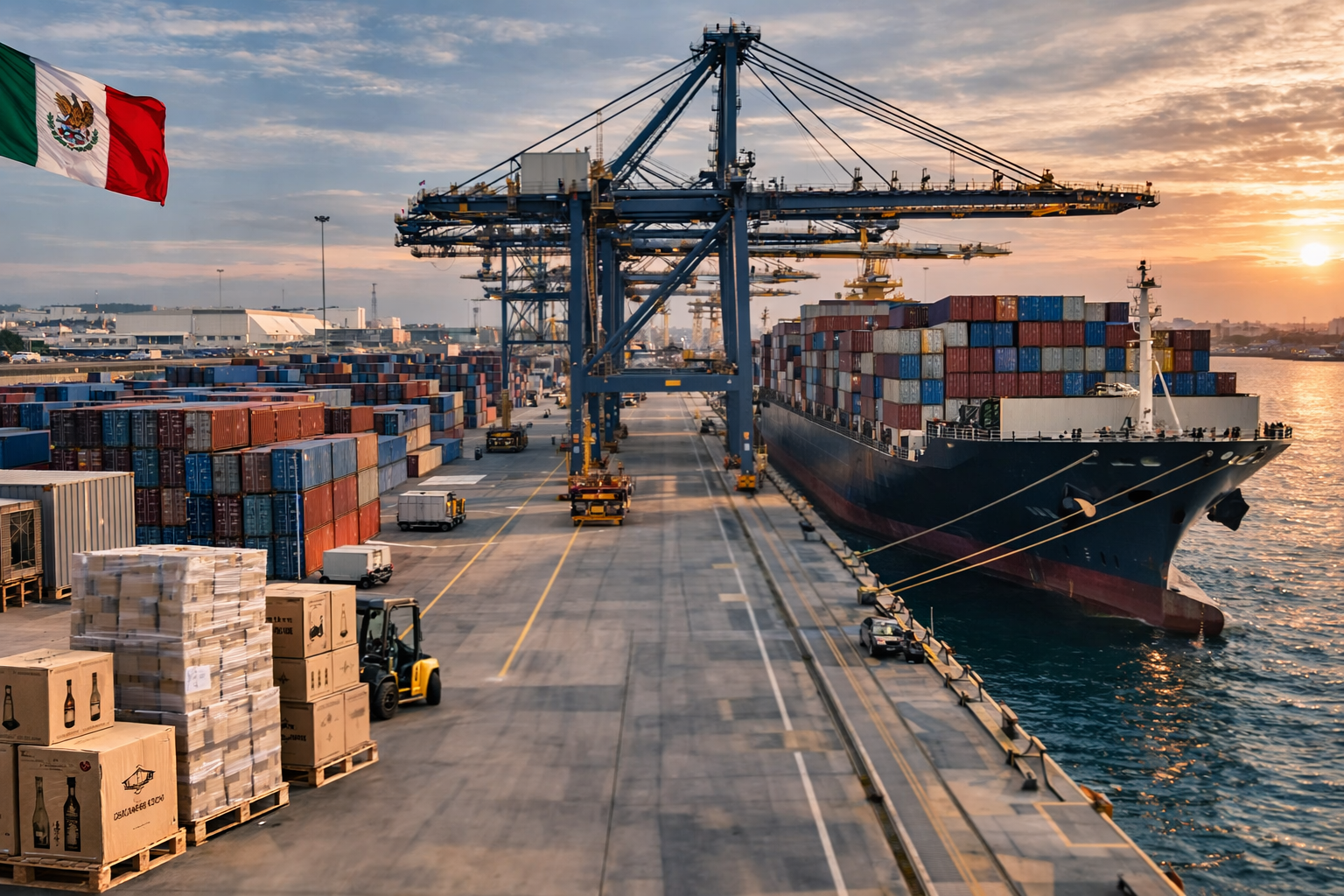
Mexico exported 400.3 million liters of tequila in 2024, with 84% going to the United States, according to the Tequila Regulatory Council. Tequila is present in more than 120 countries. That concentration creates two seemingly opposite needs: protect the U.S. corridor and develop options for other markets.
Altamira often enters that discussion because of its Gulf location, container activity and access to international ocean networks. Yet an alternate port creates resilience only when the full operation works from origin to final destination.
A backup route that has never been tested is not a backup route yet.
It is a hypothesis. Turning it into real capacity requires validating cost, transit, frequency, documentation and inland execution.
Altamira does not automatically replace Laredo
For customers in the United States, the Nuevo Laredo ground corridor may remain the natural choice because of frequency and connectivity. For Atlantic or European destinations, or networks that need balance across markets, Altamira may play a complementary role.
The decision is not “port versus border.” A network can assign different corridors by market, urgency, volume and service promise.
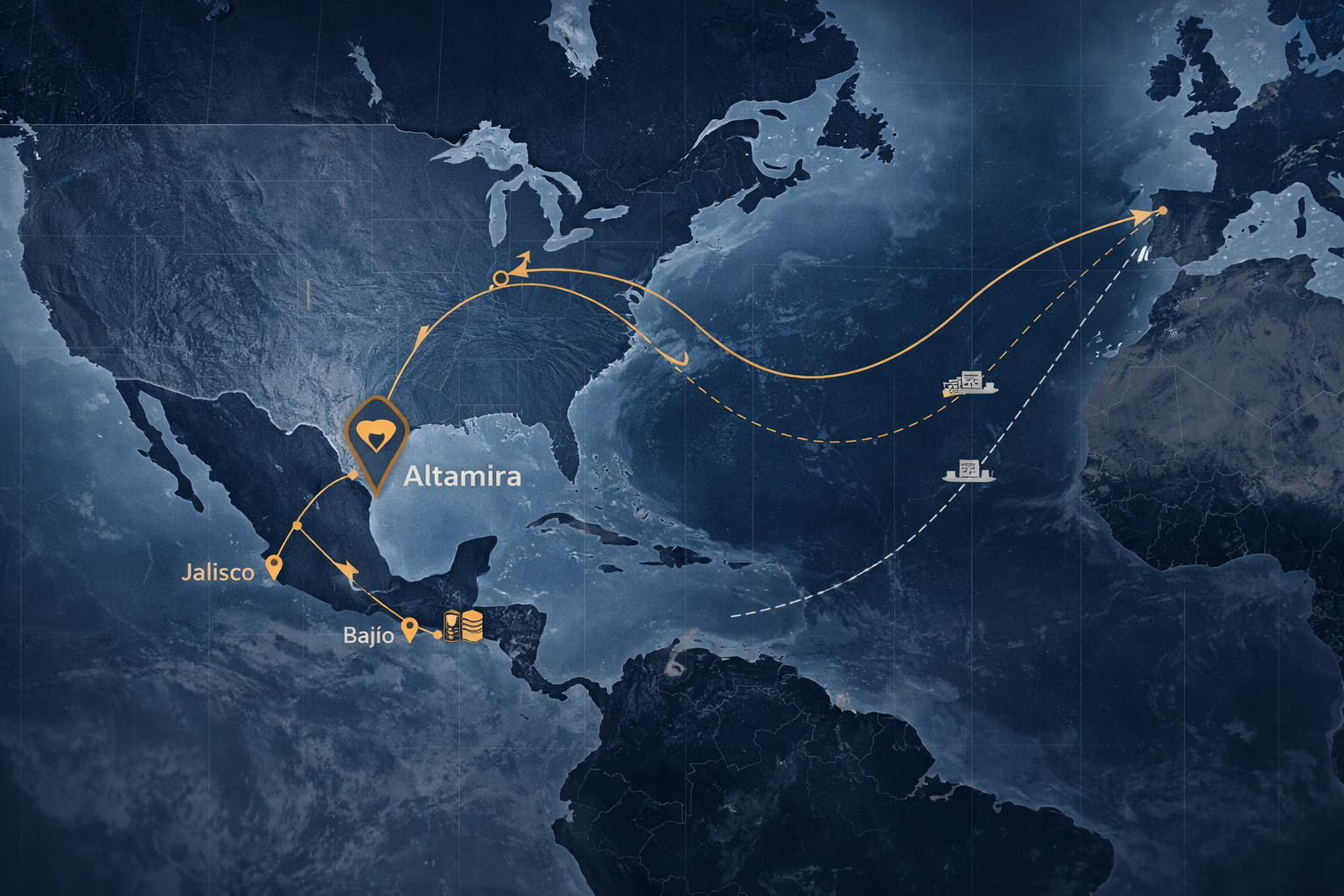
Six questions before moving a shipment
1. Does the destination favor a Gulf gateway?
Compare the full itinerary to the customer, not only the ocean leg. Attractive port-to-port transit can be lost through connections, waiting or final distribution.
2. What changes between the plant and port?
Measure distance, security, loading windows, yards, empty return and contingencies from Jalisco or the Bajío to the gateway.
3. Are frequency and equipment sufficient?
Confirm services, transshipment, free time and container availability. An infrequent route may add inventory even when another cost falls.
4. Is the file ready for the destination market?
For tequila products, the CRT states that its Export Certificate supports authenticity and quality before customs and import authorities. Labels, invoice, origin support and buyer requirements also need review.
5. What is the total landed cost?
Include inland freight, handling, customs, storage, demurrage, transit, inventory and final delivery. An isolated port rate does not answer the question.
6. How will the route be tested before scaling?
Define one pilot shipment, owners, milestones and success criteria. The objective is not to prove that the route “works,” but to learn under which conditions it works.
A pilot must produce a decision
| Indicator | What to compare |
|---|---|
| Total time | Plant–port–destination, including waiting |
| Total cost | Transportation, customs, port, inventory and delivery |
| Variability | Difference between planned and actual time |
| Control | Visibility, owners and response speed |
| Repeatability | Ability to sustain frequency and volume |
Diversification should reduce dependency, not create disorder
Palos Garza can support corridor analysis, customs coordination, inland transportation, ocean options and milestone follow-up. The final recommendation should start with the product, market, volume and tolerance for variability—not with promoting one port in isolation.
Want to compare Altamira with your current route?
Share origin, destination, volume, frequency, presentation and current corridor. We will prepare the questions required to evaluate a pilot.
Sources consulted