
Compliance · HAZMAT · North America
North American HAZMAT: five controls that must be resolved before shipment
Hazardous cargo does not become complex at the border. Complexity appears when classification, packaging, documents, training and operational capacity do not align at origin.
Palos Garza Guadalajara · Updated July 22, 2026 · 8 min read
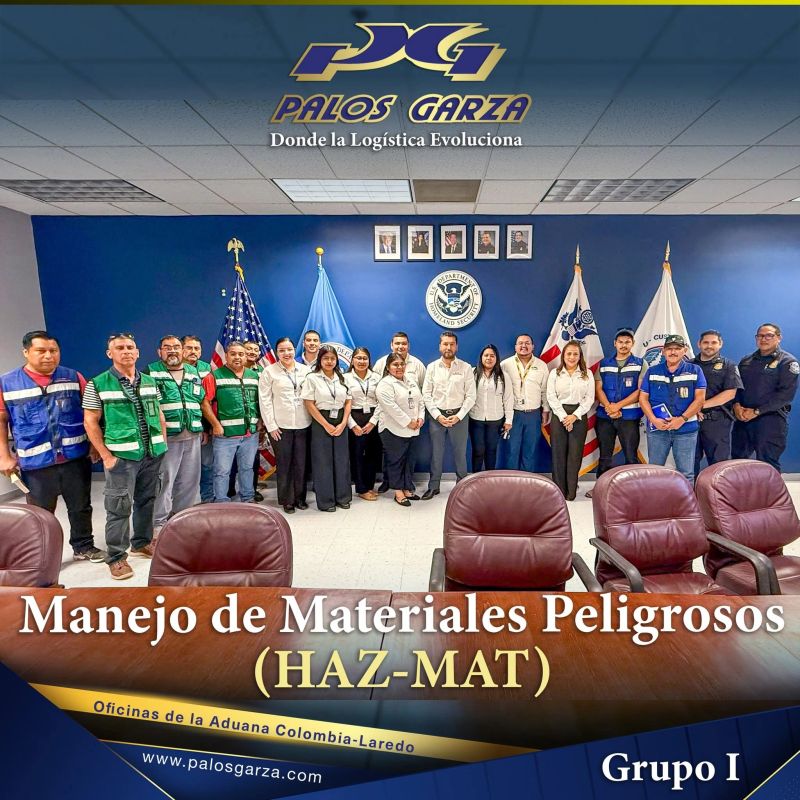
Chemicals, gases, corrosives, flammable materials and batteries can share one characteristic: a simple commercial description is not enough to transport them. Before a truck is assigned or capacity is booked, the shipper must determine what the material is, how it is classified and which requirements apply to the mode and every country on the route.
The right question is not “Do you handle HAZMAT?”
It is: “Are the classification, packaging, documentation, equipment and personnel compatible with this material and route?”
Three regulatory frameworks; one shipment
Mexico, the United States and Canada use international references, UN numbers and hazard classes, but each maintains national obligations. In Mexico, NOM-002-SCT-SEMAR-ARTF/2023 provides the dangerous goods list. In the United States, the Hazardous Materials Regulations are primarily found in 49 CFR Parts 171–180. In Canada, the Transportation of Dangerous Goods Program governs classification, documentation, means of containment, safety marks, training and reporting.
The similarities help coordination, but they do not allow a file prepared for one country to be copied into another without validation. Ocean and air legs may add separate requirements.
Five controls before cargo release
1. Correct classification
Confirm the proper shipping name, UN number, primary and subsidiary hazards, packing group and quantity. The safety data sheet is useful, but it does not replace the shipper's classification responsibility.
2. Packaging and means of containment
Verify that the package, drum, tote, cylinder, tank or container is compatible and authorized where required, with inspections and tests still valid.
3. Marks, labels and placards
Safety marks must align with classification and quantity. A correct UN number paired with the wrong placard is still an operational inconsistency.
4. Shipping paper and emergency response information
The basic description, quantities, emergency information and applicable certifications must stay aligned. PHMSA notes that, with limited exceptions, hazardous material shipments must be accompanied by documents and information that communicate hazards to carriers and emergency responders.
5. Personnel, carrier and route
Confirm function-specific training, licenses or endorsements, insurance, commodity acceptance, route restrictions and incident-response capability. Equipment availability does not equal fitness for the load.
Where holds usually begin
- the invoice description does not match the proper shipping name;
- equipment is requested before class, quantity or packaging is confirmed;
- emergency information is incomplete or does not travel with the shipment;
- prior acceptance is assumed to apply to every carrier or mode;
- an incompatibility is discovered after the load is scheduled.
The useful KPI is therefore not only “shipments delivered.” Pre-loading rejections, rescheduling, document discrepancies and correction time also deserve measurement.
A 15-minute operational review
The role of a logistics integrator
In a cross-border operation, value does not come from promising that every material can move. It comes from identifying missing information early, determining who must validate it and understanding which restrictions affect the lane. Palos Garza can coordinate operational review, customs clearance, transportation, warehousing and border infrastructure based on the declared characteristics of each project.
The material is classified, but execution questions remain?
Share origin, destination, UN number, class, quantity, package and intended mode. We will review operational feasibility before quoting.
Regulatory sources consulted
- Mexico: NOM-002-SCT-SEMAR-ARTF/2023
- PHMSA: Hazardous Materials Regulations and training
- Transport Canada: Transportation of Dangerous Goods
Informational content only. Exact requirements depend on the material, quantity, packaging, mode, jurisdiction and operating conditions; this article does not replace shipment-specific regulatory validation.